22 Brilliant Small Basement Home Theater Ideas That Work!
Creating a home theater in a small basement is one of the most rewarding projects you can tackle as a homeowner. Basements naturally block outside light, contain sound, and offer a private, dedicated space. But small dimensions, low ceilings, support columns, and ductwork can make designing a functional theater tricky.
Over years of designing and troubleshooting compact basement theaters, I’ve learned that the most enjoyable setups are those that work with the room, not against it. Prioritizing layout, acoustics, screen size, and lighting produces far more impact than simply buying big, expensive equipment.
Here’s a practical, experience-driven guide to small basement home theater ideas you can implement today.
Table of Contents
Seating and Layout Ideas for Small Basement Theater
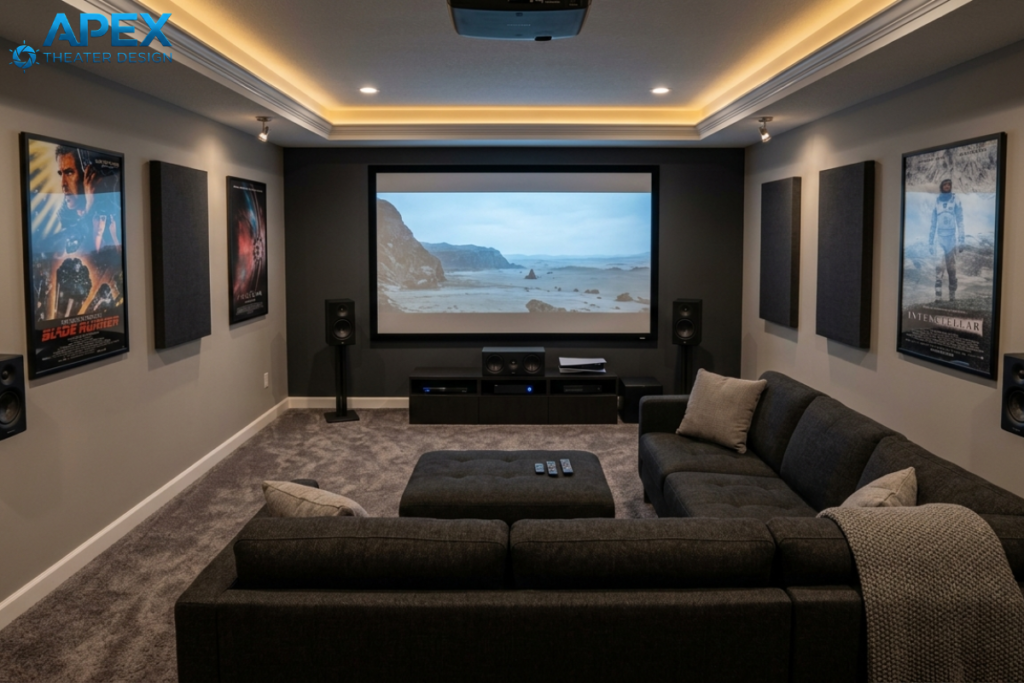
Before you even think about screens or speakers, the backbone of any basement theater is your seating and layout. In small or awkward spaces, it’s easy to make a layout mistake that ruins sightlines, sound balance, or even comfort.
I’ve moved couches and recliners dozens of times in basements barely 12 feet wide, learning what works versus what just “looks good on paper.”
In this section, we’ll look at practical seating arrangements, spacing tips, and layouts that maximize both comfort and audio performance, even in tight or oddly shaped basements.
1. Single Wall Theater Layout (High Impact)
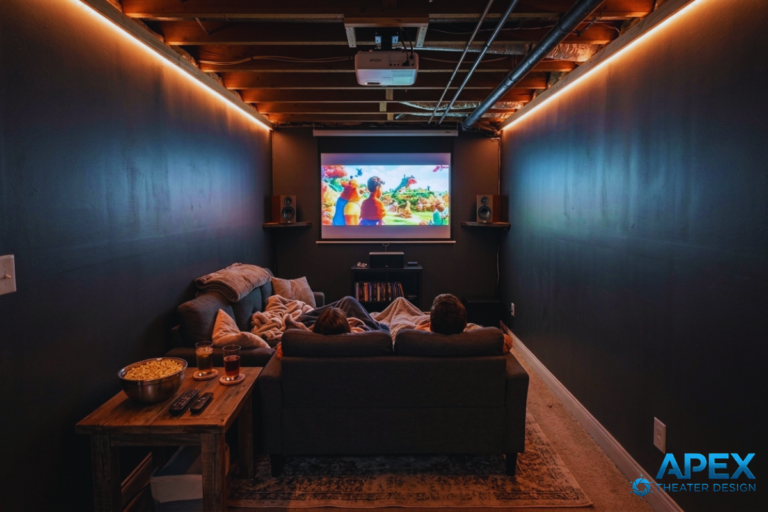
For narrow or short basements, a single wall layout keeps everything simple and effective. Mount the screen on the front wall and place seating 8–12 feet away, depending on screen size. Front left and right speakers should sit at ear height, angled toward the couch, with a center channel directly beneath the screen. Surrounds go slightly behind seating, ideally 1–2 feet above ear level. Wall-mounted surrounds save floor space and improve coverage.
Tip from experience: In a 12-foot-wide basement, careful placement of a 90-inch screen and front-stage speakers made the room feel larger and more immersive than its size suggested.
2. Sectional and Modular Seating
Bulky theater chairs often overwhelm tight spaces. A compact sectional sofa or modular seating allows flexibility and keeps sightlines clear.
L-shaped sectionals work well for casual TV or gaming setups, freeing space for proper speaker placement.
Budget Note: Consider lightweight, movable chairs or ottomans to convert the room for game night or sports viewing. Flexibility is key in multi-purpose basements.
3. Narrow Room Layout
For long, narrow basements, a single row of seating centered in the room maintains balance. Keep the couch at least 12 inches from the back wall to prevent bass buildup and improve surround sound.
4. Bar-Style Seating Behind the Couch
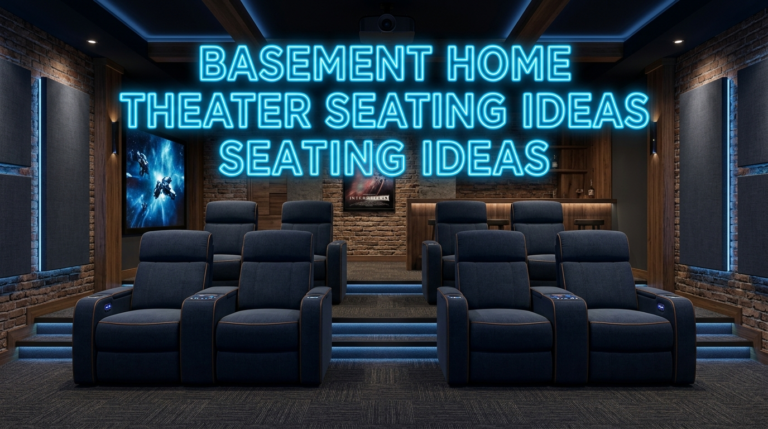
If you have extra depth, a narrow counter with stools provides a second row without requiring a full riser. Ensure the ceiling is tall enough to maintain comfortable headroom.
Display and Projector Solutions for Small Basements
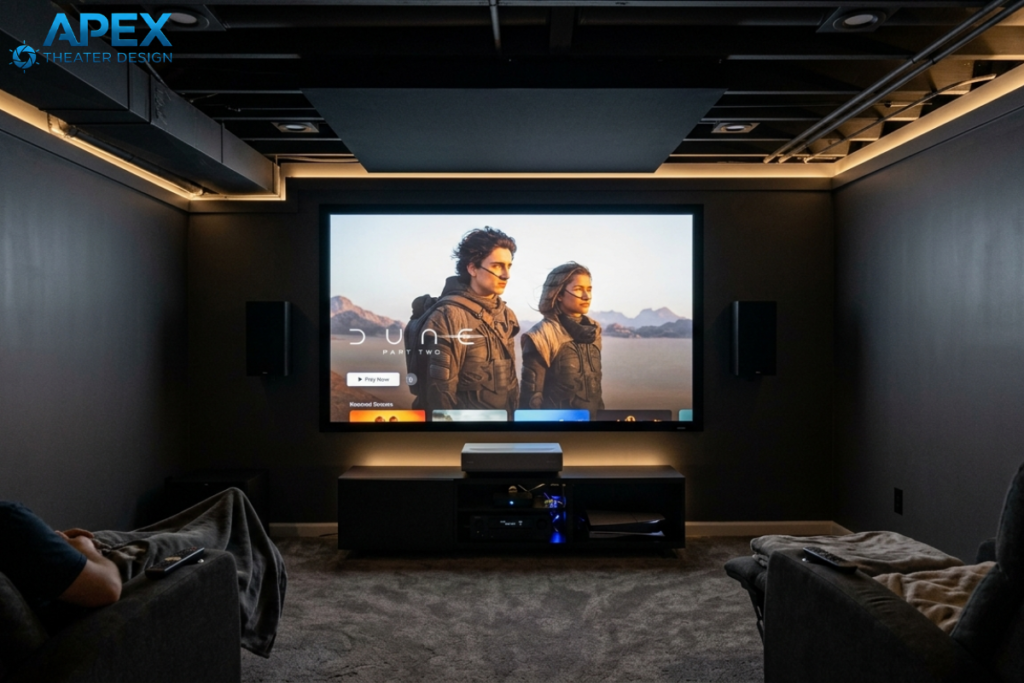
Picking the right screen or projector is about fitting the room, not just size. Here’s how to get a big image in a tight space:
5. Ultra Short-Throw Projectors
When ceiling height or depth is limited, ultra-short-throw projectors allow you to project a 100-inch+ image from just inches away from the wall. These modern projectors ideal for rooms with ductwork or low ceilings.
Pro Tip: Check the throw ratio carefully; even a small basement can feel cramped if the projector sits too far from the screen.
6. Projector Ceiling or Beam Mounting
Exposed beams or soffits can be leveraged for mounting projectors when ceiling mounts aren’t feasible. This simplifies alignment and cable routing.
7. Projector Screens with Curtains
Framing the screen with dark curtains reduces light reflection, hides speakers, and visually focuses the viewing area. Even inexpensive black velour panels make a noticeable difference.
8. Dark Front Wall & Ceiling
Painting the screen wall and part of the ceiling in matte charcoal or black dramatically improves perceived contrast and depth. You don’t need to paint the entire room; just the area surrounding the screen.
Small Basement Home Theater Ideas: Audio and Acoustic Optimization
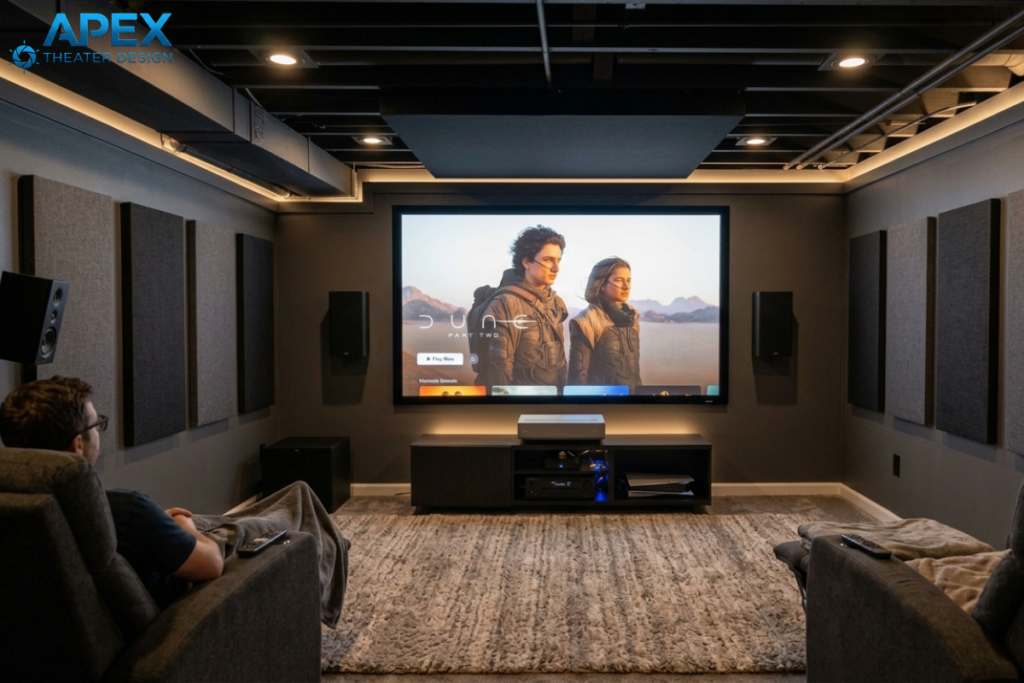
Sound can make a tiny room feel huge or echo like crazy! Studies on home theater acoustics show that careful positioning of speakers relative to walls and listening areas dramatically improves clarity and evenness, helping small rooms sound larger and more enveloping (Source).
This reinforces what I’ve found through hands-on trial and error: small, thoughtful adjustments to placement and acoustic treatment have a bigger impact than adding more expensive equipment.
These ideas will help you fix common small basement home theater audio problems:
9. Acoustic Panels (High Impact)
Small basements often have hard surfaces that reflect sound. Fabric-wrapped panels absorb echo, improve dialogue clarity, and can be used as a decorative feature. Six panels behind seating are usually enough for a modest room.
DIY Note: You can make budget panels with insulation foam and fabric to save money without sacrificing performance.
10. Subwoofer & Bass Management
Small rooms are prone to bass nulls and hotspots. I always reposition subwoofers multiple times and measure response with a calibration mic. Corners often exaggerate bass, so experiment with placement along walls or under seating.
11. Wall-Mounted Surrounds
Floor-standing speakers can block walkways. Mounting surrounds slightly above ear height frees space and improves coverage in narrow rooms.
12. Carpet and Rugs
Hard basement floors reflect high frequencies. A thick carpet or rug reduces sharp reflections, improves overall clarity, and adds comfort. Check out our recent guide on the best basement home theater flooring.
Lighting and Ambience for Basement Movie Room
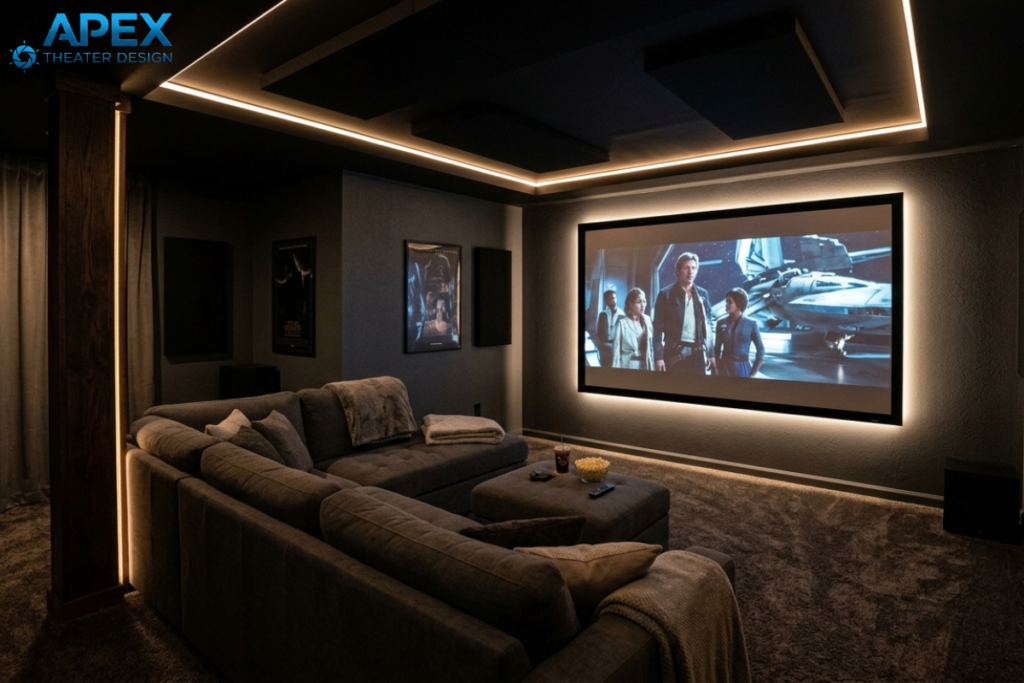
Lighting usually sets the mood for your basement movie room without hurting the picture. Here are some easy ways to make your theater feel cinematic:
13. LED Ambient Lighting
Soft, dimmable LED strips along the ceiling perimeter or behind the screen create a cinematic atmosphere without affecting image quality.
14. Integrated Lighting Around Support Columns
Columns don’t have to be obstacles. Use them to mount small LED accents or speakers, transforming structural necessities into functional design features.
Furniture, Cable Management, and Equipment
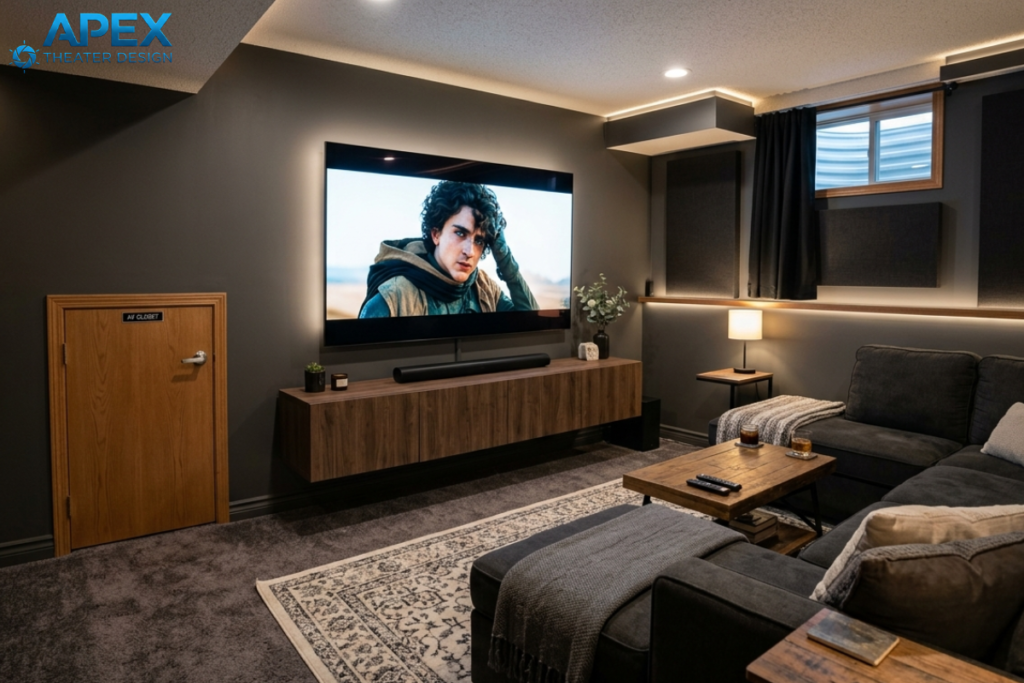
A small basement can quickly become cluttered if cables, consoles, or furniture aren’t planned carefully.
I’ve built dozens of floating media consoles, hidden equipment closets, and cable raceways to keep tight rooms functional and clean.
In this section, you’ll learn how to manage your gear in a way that maximizes space, improves accessibility, and maintains aesthetics, so nothing distracts from the viewing experience.
15. Floating Media Console
A wall-mounted console keeps the floor clear, hides cables, and avoids clutter in tight spaces. Ensure studs and weight limits are considered to safely support TVs or AV components.
16. Hidden Equipment Closet
Placing receivers, consoles, and streaming devices in a nearby closet reduces noise and clutter. Run HDMI and speaker wires through the wall for a clean setup.
17. Hidden or Paintable Cable Raceways
Finished basements often don’t allow in-wall cabling. Paintable raceways along baseboards keep wires organized and nearly invisible. Be sure to label everything for easier troubleshooting later.
Design Enhancements Ideas for Basement Movie Room
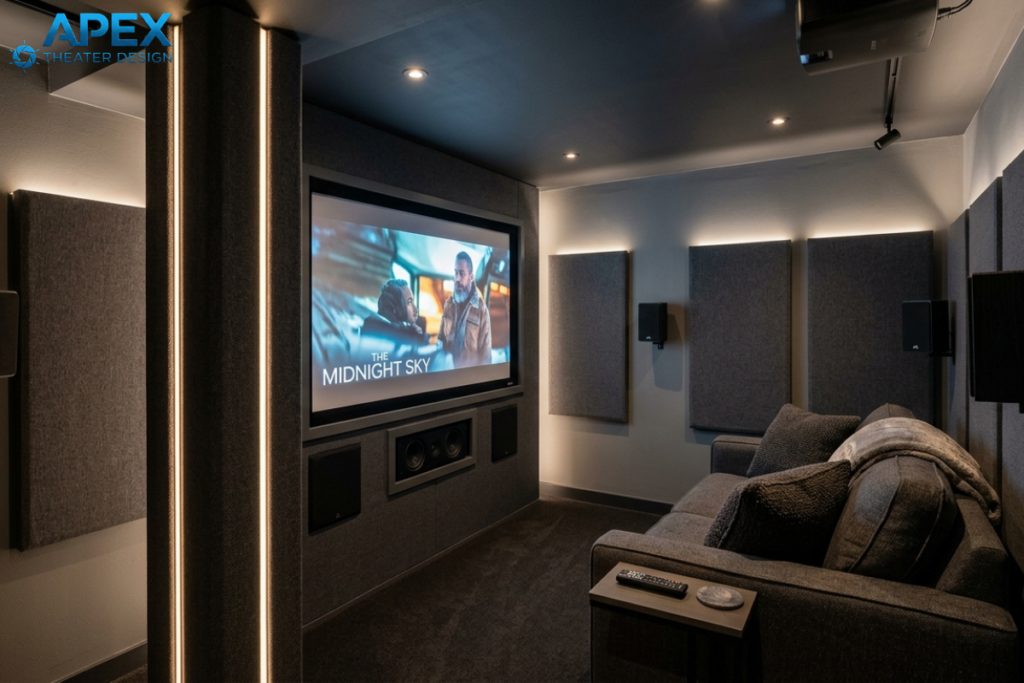
This is my favorite part about small basement home theater ideas: enhancing the visual appeal of your movie haven. Beyond functionality, small basement theaters benefit from thoughtful design touches that improve both sound and visual appeal.
From integrating support columns into the layout to using acoustic panels as decor, I’ve learned that small design tweaks often have the biggest impact.
Below, we discuss ways to elevate your space, making it feel intentional, polished, and immersive without spending a fortune or sacrificing performance.
18. Support Column Integration
Columns can hold surround speakers, acoustic panels, or lighting. Wrapping a column in acoustic fabric can improve sound while visually blending it into the room.
19. Built-In Speaker Walls
In-wall speakers create a minimalist front stage. Ensure proper ear-level placement and adequate wall depth for speaker performance.
20. Flexible Modular Setup
For multi-purpose spaces, modular furniture lets the room adapt to movies, gaming, or sports. Movable chairs, ottomans, and foldable tables maximize functionality without permanent layout compromises.
21. Cozy Alcoves
Small recessed areas can become mini-theaters with a loveseat and a small screen. The surrounding walls contain sound and create a focused viewing area.
BONUS: Plan Your Small Basement Theater In 8 Steps
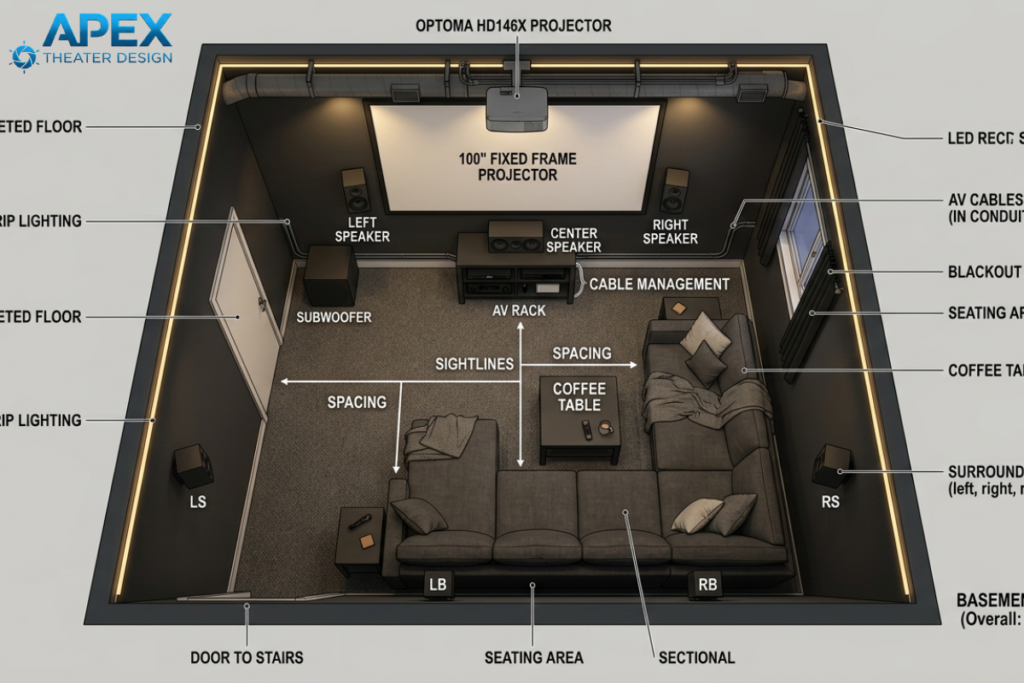
Designing a basement movie room can feel overwhelming, especially in a small or awkward space. The key is to tackle it step by step.
Follow these eight practical steps to help you create a comfortable, immersive theater that works with your basement, not against it.
1. Measure your space, ceiling height, and note obstacles
Before buying anything, take precise measurements of your basement, including width, length, and ceiling height. Identify obstacles like support beams, ductwork, or uneven walls. Knowing these constraints early prevents costly mistakes and helps you plan a layout that fits.
2. Select a screen type and size suitable for the viewing distance
Choose a screen or projector that matches the depth of your room. In tight basements, ultra short-throw projectors or a slightly smaller TV often work better than a massive screen. Aim for a viewing distance where the image fills your vision without overwhelming the space.
3. Decide on seating layout and type
Pick seating that balances comfort and space. Sectionals, loveseats, or modular chairs usually work better than bulky recliners. Consider rows, risers, or bar seating if your basement allows for multiple viewers, while maintaining clear sightlines to the screen.
4. Position speakers and subwoofer carefully
Sound makes a room feel immersive. Place front speakers near the screen edges and the center channel under it. Wall-mount or corner-mount surrounds slightly above ear height, and experiment with subwoofer placement to reduce bass nulls or boominess. Small adjustments can dramatically improve clarity.
5. Address acoustics with rugs, panels, and wall treatments
Basement walls and floors often reflect sound, causing echo or harshness. Rugs, carpets, fabric-wrapped panels, or curtains absorb reflections and create a balanced listening environment. Even a few well-placed panels can make dialogue and music sound much clearer.
6. Plan lighting to enhance the atmosphere
Lighting should enhance the theater feel without washing out the screen. Dimmable LEDs behind the screen, along the ceiling, or accenting columns add ambiance. Avoid bright overhead lights during viewing, but allow enough for safe movement and access to controls.
7. Manage cables and equipment placement
Organize AV gear so it’s accessible but out of sight. Use floating media consoles, wall-mounted shelves, or hidden closets to keep the room clean. Label cables and plan routes before installation; it saves hours of headaches during setup or future upgrades.
8. Add finishing touches
Small design details make a basement theater feel complete. Curtains around the screen, acoustic column covers, ambient LEDs, or subtle wall decor can enhance both style and function. Besides being visually appealing, these touches improve image contrast, sound, and overall immersion.
Final Thoughts
A small basement doesn’t need to be large to deliver immersive sound and cinematic visuals. The key is working with the space rather than forcing oversized equipment into it. Careful screen sizing, smart seating layouts, thoughtful speaker placement, effective acoustic treatments, and controlled lighting make a far bigger difference than expensive gear alone. By following these small basement home theater ideas, you can turn the modest spaces into comfortable, functional, and impressive theaters. With proper planning and a few strategic upgrades, your basement can transform into a room that’s both enjoyable and tailored to the space you have.