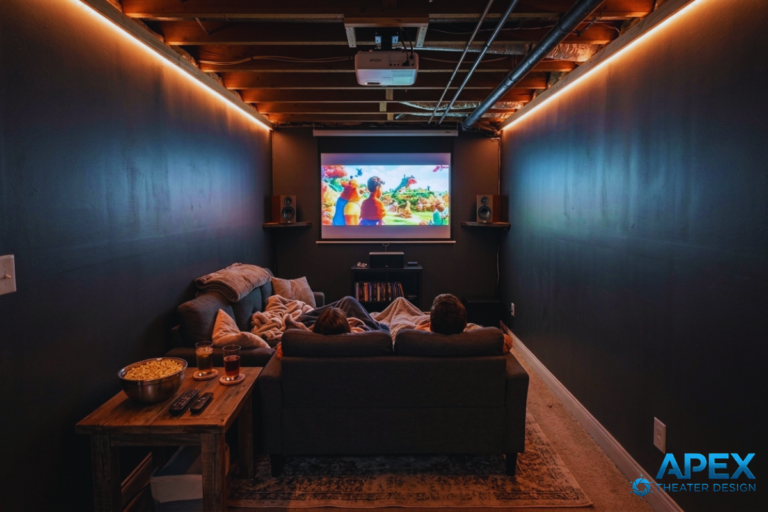

If you are planning a basement theater, flooring is one of those decisions that seems simple until you build the room. I have seen people obsess over projector models, speaker brands, and screen size, then treat the floor like an afterthought.
A few months later, they are wondering why the room sounds bright, footsteps echo, or their expensive subwoofer feels underwhelming.
After building and tuning several basement theaters over the past fifteen years, I can tell you that flooring has a bigger impact on both acoustics and comfort than most beginners expect.
So, what is the best flooring for a basement theater? It usually comes down to three priorities: Acoustic control, moisture resistance, and long-term comfort. Basements bring their own challenges, and the wrong flooring choice can create problems that are expensive or frustrating to fix later.
This guide walks you through the flooring options that work in real basement theaters, what I have learned from trial and error, and how to choose the right one for your room and budget.
Table of Contents
Why Flooring Matters In A Basement Theater

When people ask what is the best flooring for a basement theater, they usually expect a simple answer. The reality is that flooring affects several parts of the theater experience at the same time.
First, it influences room acoustics. Hard surfaces reflect sound waves. Soft surfaces absorb them. In a theater, too many reflective surfaces create harsh dialogue and exaggerated echoes.
Second, flooring affects bass performance. Low frequencies interact with the entire room structure. The floor is one of the largest surfaces in contact with subwoofer energy.
Third, basements often have moisture concerns. Concrete slabs can release moisture slowly over time. A flooring choice that works perfectly upstairs may fail completely in a basement.
Finally, your choice of home theater flooring affects the overall room comfort. Since you’ll be spending hours sitting in your theater, a cold or hard floor can quickly make the room feel less inviting.
I have walked into beautifully designed theaters where the sound was harsh simply because the builder installed shiny laminate flooring across the entire space. The speakers were not the problem. The room surfaces were!
In fact, research has shown that lightweight laminate floors on thin underlayments above concrete slabs provide only limited impact sound insulation, especially for low-frequency noises like footfalls or bass. (Source).
Carpet Is The Best Flooring Option for Basement Theaters

In most basement theaters I have built, carpet ends up being the best flooring choice. Not because it looks traditional, but because it solves several problems at once:
- Carpet absorbs mid and high frequency reflections. This helps control dialogue clarity and prevents the room from sounding overly bright. When you combine carpet with acoustic wall panels, the sound becomes noticeably more balanced.
- Carpet also reduces footstep noise. This matters more than people think. If someone gets up for popcorn during a movie, hard flooring can send noise through the room.
- Another advantage is comfort. Basements tend to run cooler than upper floors. Carpet provides insulation and simply feels better underfoot.
After experimenting with several flooring materials over the years, I keep coming back to carpet because it consistently delivers predictable acoustic results.
Carpet With Padding Makes A Difference:
One lesson I learned early on was that the padding underneath the carpet matters almost as much as the carpet itself.
A quality carpet pad improves acoustic absorption and comfort. It also helps reduce vibrations that can travel through the floor structure.
In one theater upgrade project, we replaced thin builder-grade carpet with thicker padding. The speakers and subwoofers stayed the same. Dialogue clarity improved immediately and the room felt quieter between scenes.
It was a simple change, but one of the most noticeable upgrades in the entire room.
The Basement Challenge: Moisture and Concrete Slabs

Before installing any flooring in a basement theater, moisture needs to be considered.
Concrete slabs naturally hold and release moisture. Even if your basement feels dry, seasonal humidity changes can cause problems under certain flooring materials.
I learned this the hard way years ago during a renovation where laminate flooring started to warp after one winter. The slab looked dry during installation, but slow moisture release caused issues months later.
To avoid this, I now recommend using a moisture barrier or specialized basement subfloor system before installing carpet or other flooring materials.
Products designed for basement subfloors create a small air gap between the concrete and the finished floor. This allows moisture to dissipate rather than becoming trapped.
This adds to your total cost, but it protects your theater in the long term.
Carpet Tiles Offer A Practical Alternative

Carpet tiles have become increasingly popular in home theaters, and for good reason…
Instead of installing one large piece of carpet, carpet tiles are individual squares that lock together or use adhesive backing.
The biggest advantage is easy maintenance. If someone spills a drink during movie night, you can replace a single tile instead of the entire floor.
I have used carpet tiles in several multipurpose basement theaters where snacks and kids were part of the equation.
Being able to swap out a damaged section is extremely convenient.
What’s more, carpet tiles acoustically perform similarly to traditional carpets when installed with proper backing.
Some higher-end tiles even include acoustic padding built into the tile itself.
From a sound perspective, they still provide the absorption needed to reduce reflections and improve clarity.
Hardwood or Laminate Flooring: When It Works and When It Doesn’t

Many homeowners transforming their basements into home theaters ask about hardwood flooring because they like the look.
In a dedicated theater, hardwood floors are rarely the best option from an acoustic standpoint.
WHY?
Because hard surfaces reflect sound aggressively. When a room already has drywall, a projector screen, and possibly bare ceilings, hardwood can push the room into a highly reflective acoustic environment.
The result is often a bright, echo-heavy sound.
I have helped troubleshoot several theaters where the owner installed beautiful hardwood floors only to later add large rugs to tame reflections.
If rugs are going to cover most of the floor anyway, starting with carpet would have been the simpler solution.
When Hard Flooring Can Work:
Hardwood or laminate can still work in a multipurpose basement theater.
In those rooms, a large area rug placed between the speakers and seating area helps control reflections.
This setup is common when the theater doubles as a family room or game room.
Just understand that some acoustic compromises will be involved.
Luxury Vinyl Plank (LVP) Offer A Balanced Middle Ground

Luxury vinyl plank flooring has also lately become common in basements. This type of flooring handles moisture well and is more comfortable than tile or stone.
In a theater environment, LVP sits somewhere between hardwood and carpet in terms of acoustics. It is still reflective, but slightly less harsh than hardwood.
If someone wants the durability of hard flooring, LVP paired with thick area rugs can work reasonably well.
One theater I worked on in Minneapolis had dark LVP flooring with a large theater rug covering the seating zone. It maintained a clean look while still controlling reflections in the listening area.
And when we took time to listen and tweak speaker positions, the room sounded much more balanced than neighboring rooms where hard floors went uncovered.
It was not as acoustically controlled as full carpet, but it was a practical compromise for a shared space.
Flooring And Subwoofer Performance
Many homeowners rarely think about flooring when discussing subwoofers for their home cinema rooms, but the floor plays a role in bass perception.
Subwoofers interact with the entire room structure. Hard flooring tends to reflect more low-frequency energy, while carpet absorbs a small portion of higher bass frequencies.
In most cases, the difference is subtle compared to room size and subwoofer placement.
The bigger lesson from experience is that subwoofer placement matters far more than flooring type.
I have repositioned subwoofers several times in the same room while calibrating systems to eliminate bass nulls. Moving the subwoofer two feet can dramatically change bass response.
Flooring should not be chosen solely based on bass concerns.
Common Flooring Mistakes To Avoid In Basement Theaters:

Even with the best intentions, many homeowners unknowingly make flooring choices that undermine their theater’s sound and comfort.
Before you install anything, it helps to know the most common mistakes I’ve seen firsthand in basement theaters. Avoiding these pitfalls can save you money, frustration, and a lot of rework down the road.
Installing Flooring Before Moisture Testing
One of the most common mistakes is installing flooring without checking for moisture issues in the concrete slab. A simple moisture test kit can help you prevent expensive damage later.
Choosing Flooring Only for Appearance
Theater rooms are about sound and immersion. A flooring material that looks great in photos may create acoustic problems. I have seen reflective floors turn well-tuned speaker systems into echo chambers.
Forgetting About Comfort
Basement theaters are used for long viewing sessions. Cold tile or stone floors may look impressive, but they rarely feel comfortable during a two-hour movie. Comfort contributes to the overall theater experience more than many people realize.
Budget Considerations for Basement Theater Flooring
If you’re building a basement theater on a budget, flooring doesn’t have to break the bank. You can still achieve theater-friendly flooring without overspending.
In most home theater builds, investing in acoustic treatment, proper speaker placement, and a calibrated display can have a larger impact than premium flooring materials.
In my experience, investing in a mid-range carpet with quality padding often delivers more acoustic benefit than expensive hardwood or specialty materials.
If your basement movie room doubles as a living space, then investing in durable flooring with area rugs can make sense.
The secret lies in understanding what tradeoffs you are making.
Check out our guide on basement home theater floor plans
So What Is the Best Flooring for a Basement Theater?
After designing and tuning multiple basement theaters, carpet remains the most reliable flooring choice for dedicated home movie rooms.
Carpet flooring improves acoustics, reduces noise, and keeps the room comfortable. When paired with a moisture barrier or basement subfloor system, it performs well even on concrete slabs.
Carpet tiles deliver similar acoustic benefits with easier maintenance, which makes them a strong option for multipurpose theaters.
Hardwood, laminate, and luxury vinyl plank can also work when aesthetics or durability are priorities, but they usually require large rugs to control reflections.
Overall, to answer your question on “what is the best flooring for a basement theater,” it is the one that supports good sound, handles basement conditions, and fits the way your room will be used.
A well-planned basement movie room is rarely about one perfect material. It is about thoughtful decisions that work together.
Flooring is just one piece of that puzzle, but getting it right helps everything else perform the way it should.